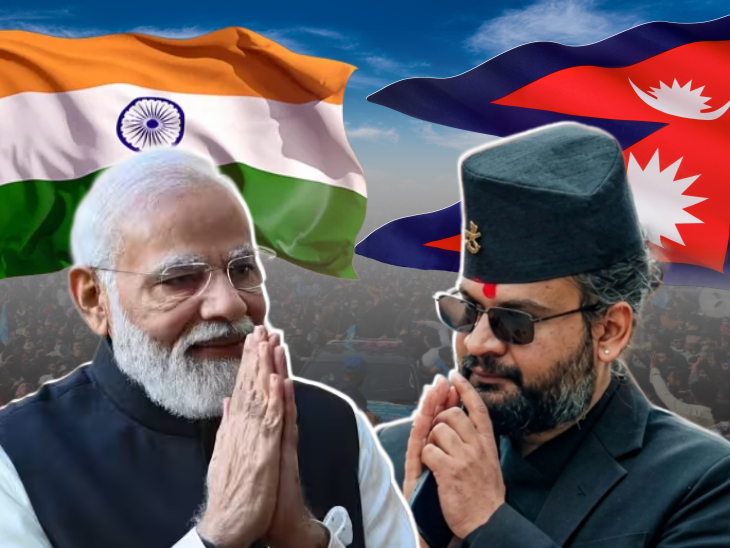
New Delhi: Few relationships in South Asia are as unique, complex and emotionally rooted as that between India and Nepal. Bound by centuries of shared culture, religion, language, trade and people-to-people ties, the two neighbours enjoy a relationship that transcends diplomacy. Yet, despite their deep historical connections, the partnership has periodically been tested by border disputes, rising nationalism and shifting geopolitical realities.
Recent remarks by Balen Shah have once again brought the state of India-Nepal relations into focus. Speaking in Nepal’s Parliament, Shah suggested that territorial disputes between the two countries may not be entirely one-sided, triggering political controversy and reigniting debate over long-standing border issues. The episode reflects broader changes underway in the bilateral relationship, shaped by domestic politics, regional power dynamics and the growing influence of China.
A Relationship Beyond Borders
India and Nepal share one of the world’s most open and interconnected borders. Citizens of both countries can travel, live and work across the frontier without visas or passports. Cultural and religious links run deep, from the spiritual connections between Pashupatinath Temple and Kashi Vishwanath Temple to the historical association of Janakpur and Ayodhya.
Millions of Nepali citizens study, work and conduct business in India, while the distinguished service of Nepali-origin soldiers in the Gorkha Regiment remains a symbol of enduring trust between the two nations.
The Legacy of the 1950 Treaty
Modern India-Nepal relations are largely shaped by the India-Nepal Treaty of Peace and Friendship, which established a framework for security cooperation, trade and free movement of people.
While India views the treaty as a cornerstone of strategic partnership, many political groups and intellectuals in Nepal have argued that it no longer reflects contemporary realities and should be reviewed. Calls for revisiting the treaty have become increasingly common in Nepal’s political discourse, often framed around issues of sovereignty and equality.
Border Disputes Remain Sensitive
Territorial disagreements continue to be among the most contentious issues in bilateral relations. Areas such as Kalapani, Lipulekh, Limpiyadhura and Susta remain disputed.
Tensions peaked in 2020 after both countries issued competing maps asserting territorial claims. For Nepal, the issue became closely tied to national identity and sovereignty. For India, some of these regions hold strategic significance because of their proximity to the Chinese border and important transit routes.
China’s Expanding Footprint
The most significant geopolitical development affecting India-Nepal ties in recent years has been China’s growing presence in Nepal. Through infrastructure investments, hydropower projects and participation in the Belt and Road Initiative, Beijing has expanded its economic and strategic influence in the Himalayan nation.
Nepal has sought to diversify its international partnerships, often balancing relations between its two giant neighbours. However, despite China’s increasing investments, India remains Nepal’s largest trading partner and a critical source of fuel, food supplies, medicines and employment opportunities.
The Shadow of 2015
The year 2015 marked a turning point in public perceptions. Following Nepal’s new constitution and protests by the Madhesi community, disruptions occurred along the India-Nepal border. While India maintained that supply disruptions resulted from protests on the Nepali side, many in Nepal perceived the situation as an unofficial blockade.

The episode left a lasting impact on Nepal’s political discourse and contributed to a rise in anti-India sentiment among sections of society. It also accelerated Nepal’s efforts to deepen engagement with China.
Strong Economic Interdependence
Despite political disagreements, economic ties between the two countries remain robust. India is Nepal’s largest trade partner and a major investor in sectors including banking, telecommunications, education and energy.
Hydropower cooperation has emerged as one of the most promising areas of partnership. Nepal possesses vast hydroelectric potential, while India offers a large and growing market for electricity exports. Recent cooperation in power trade has created new opportunities for economic growth on both sides.
The expansion of digital payment systems and cross-border financial connectivity has also modernized economic engagement, demonstrating that practical cooperation continues even during periods of political tension.
Water, Security and Shared Challenges
Water resources remain both an opportunity and a source of debate. Rivers such as the Kosi, Gandak and Mahakali are vital to agriculture, energy production and flood management in both countries.
Security cooperation is equally important. While the open border facilitates trade and human interaction, it also requires coordinated efforts to combat smuggling, human trafficking and other cross-border crimes. Intelligence sharing and security collaboration have therefore remained key components of bilateral engagement.
People-to-People Bonds Endure
Perhaps the most resilient aspect of India-Nepal relations is the strength of social and cultural ties. Cross-border marriages, educational exchanges, tourism and religious pilgrimages continue to bind the two societies together.
Political disputes may periodically strain official relations, but the everyday connections between ordinary Indians and Nepalis have consistently acted as a stabilizing force.
The Road Ahead
As South Asia navigates an increasingly complex geopolitical landscape, both India and Nepal face the challenge of adapting their relationship to contemporary realities. Nepal seeks greater recognition as an equal partner, while India remains focused on safeguarding its strategic interests and regional security.
Analysts believe that sustained dialogue, greater economic integration, enhanced youth and educational exchanges, and constructive engagement on outstanding issues such as border disputes and treaty review will be essential for strengthening mutual trust.
The India-Nepal relationship is too deeply rooted to be defined solely by periodic tensions. Built on history, geography and human connections, it remains one of the most significant partnerships in South Asia. How both nations manage evolving challenges in the years ahead will determine whether they emerge as a model of regional cooperation—or become increasingly shaped by strategic competition and mistrust.